
George Mason University is getting a quantum computer, and it is landing in Northern Virginia. On September 2, 2026, the university and Oxford-based frontier computing company TreQ announced a partnership to deploy a $7.7 million open-architecture quantum computing system at one of George Mason’s Northern Virginia campuses.
The university says the system is planned for delivery and installation in early 2027, with commissioning expected by late summer 2027. It describes the machine as the first open-architecture quantum computing system in Virginia and the National Capital Region, and the first U.S. deployment built on TreQ’s Open Architecture Quantum framework. Read the George Mason announcement.
George Mason quantum computer: Quick facts
What George Mason and TreQ announced
George Mason is investing in the new system with what it calls strategic support from the Virginia Innovation Partnership Corporation and TreQ. The university says a VIPC commercialization and researcher recruitment grant is helping attract industry investment and additional philanthropy for Virginia’s quantum ecosystem. The grant amount was not published.
TreQ’s role goes beyond shipping hardware. The company will design, deploy and operate the infrastructure at George Mason, collaborate on research and curriculum, and connect the region with companies and innovators across the global quantum technology ecosystem.
Two “first” claims come with the announcement, and both are specific. George Mason says the system will be the first open-architecture quantum computing system in Virginia and the National Capital Region, and the first U.S. deployment of a system based on TreQ’s proprietary Open Architecture Quantum framework. Other open-architecture systems exist elsewhere in the country, so this is not the first of its kind in the United States.
What open architecture actually means
Most quantum systems are built around a single vendor’s processor and software. An open-architecture system is designed so different quantum processors, software, networking and related technologies can be added or swapped as they mature, rather than locking the machine into one integration approach.
TreQ founder and CEO Mandy Birch said in the announcement that the approach gives established companies, startups and researchers a place to build, test and integrate. College of Science Dean Cody Edwards put it another way: open architecture is not about being vendor-neutral, it changes what is possible by opening the system to more technologies and innovators. George Mason describes the result as built-to-evolve infrastructure that supports work across the full quantum stack.
When the quantum computer arrives
September 2, 2026: Partnership and $7.7 million investment announced.
Early 2027: Delivery and installation at a Northern Virginia campus.
Late summer 2027: Commissioning expected. Treat both 2027 dates as targets from the university, not confirmed schedules.
Why this matters for Northern Virginia
The clearest local angle is workforce. George Mason says 80 to 85 percent of its graduates work in Virginia or the region, and it is pairing the hardware with a $2.4 million catalyst investment, six new postdoctoral positions and three new faculty positions. Quantum is a priority area within the university’s Grand Challenge Initiative.
The system builds on the university’s Quantum Science and Engineering Center, where 24 faculty across seven departments and several colleges have been developing the university’s quantum work. QSEC Director Patrick Vora said the partnership gives faculty and students access to true quantum computing hardware for the first time. Quantum Science and Engineering Center.
George Mason also launched what it calls Virginia’s first interdisciplinary master’s degree in quantum science and engineering earlier this year, and QSEC recently signed a memorandum of understanding with two Korean quantum organizations, the Future Quantum Convergence Forum and the QCI Quantum-AI Convergence Center. Master’s program announcement.
Beyond campus, the university says the system will serve as foundational infrastructure for international companies exploring expansion into Northern Virginia, and that it is working with regional and industry partners to formalize a broader Virginia quantum coalition. VIPC President and CEO Joe Benevento framed the deal as a public-private partnership meant to attract industry investment, speed research commercialization and support startups in the commonwealth.
What has not been announced
For more Northern Virginia development and transportation news, see Washington Manassas Airport’s FAA approval for commercial flights and this month’s things to do in Northern Virginia.
Frequently asked questions about the George Mason quantum computer
Is George Mason University getting a quantum computer?
Yes. On September 2, 2026, George Mason and Oxford-based TreQ announced a $7.7 million open-architecture quantum computing system for one of the university’s Northern Virginia campuses.
When will the George Mason quantum computer be installed?
The university says delivery and installation are planned for early 2027, with commissioning expected by late summer 2027.
Where in Northern Virginia will the quantum computer be?
George Mason has not named the campus or building. The announcement says only that it will be located on one of the university’s Northern Virginia campuses.
Is this the first open-architecture quantum computer in the United States?
No. George Mason says it will be the first open-architecture quantum computing system in Virginia and the National Capital Region, and the first U.S. deployment based on TreQ’s Open Architecture Quantum framework. Other open-architecture systems exist elsewhere in the country.
Who will be able to use the George Mason quantum computer?
The university says the system will be available to its students and faculty, its partners, the region and the state. Access procedures, pricing and eligibility for outside companies have not been published.
Who is paying for the George Mason quantum computer?
George Mason says it is investing in the $7.7 million system with strategic support from the Virginia Innovation Partnership Corporation and TreQ. VIPC’s exact grant amount was not disclosed.
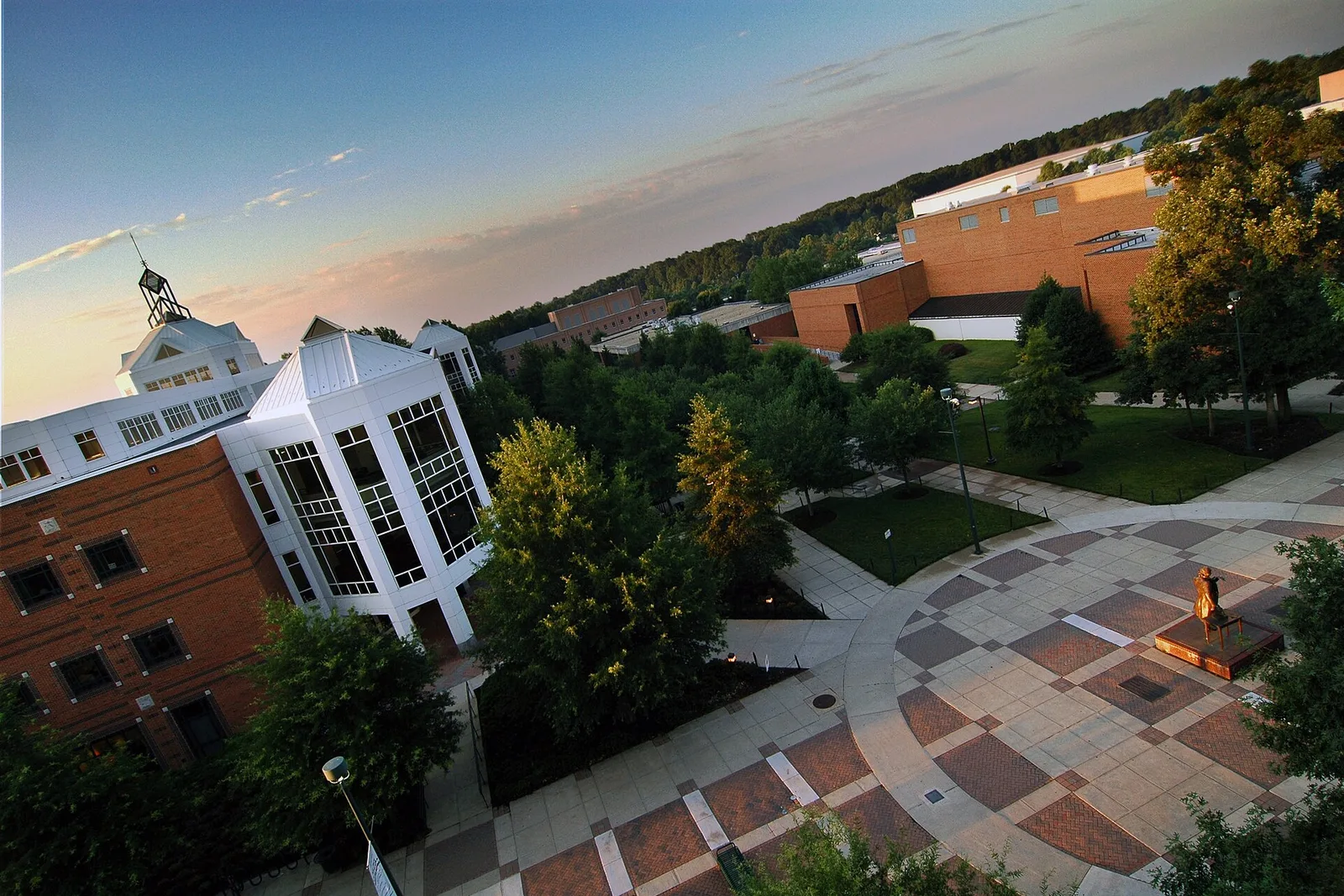
Feature image courtesy Nicolas Tan/Creative Services/George Mason University via Wikimedia Commons, CC BY-SA 4.0, cropped. It shows the Fairfax campus. The university has not said which Northern Virginia campus will house the system.
Last updated September 3, 2026. The investment, the partner, the timeline, the scoped “first” claims, the VIPC support, the QSEC faculty count, the $2.4 million catalyst investment and the new faculty and postdoctoral positions were checked against George Mason University’s September 2, 2026 announcement. The host campus, building, processor configuration, qubit count, VIPC funding amount and outside-access rules have not been published.